
Introduction
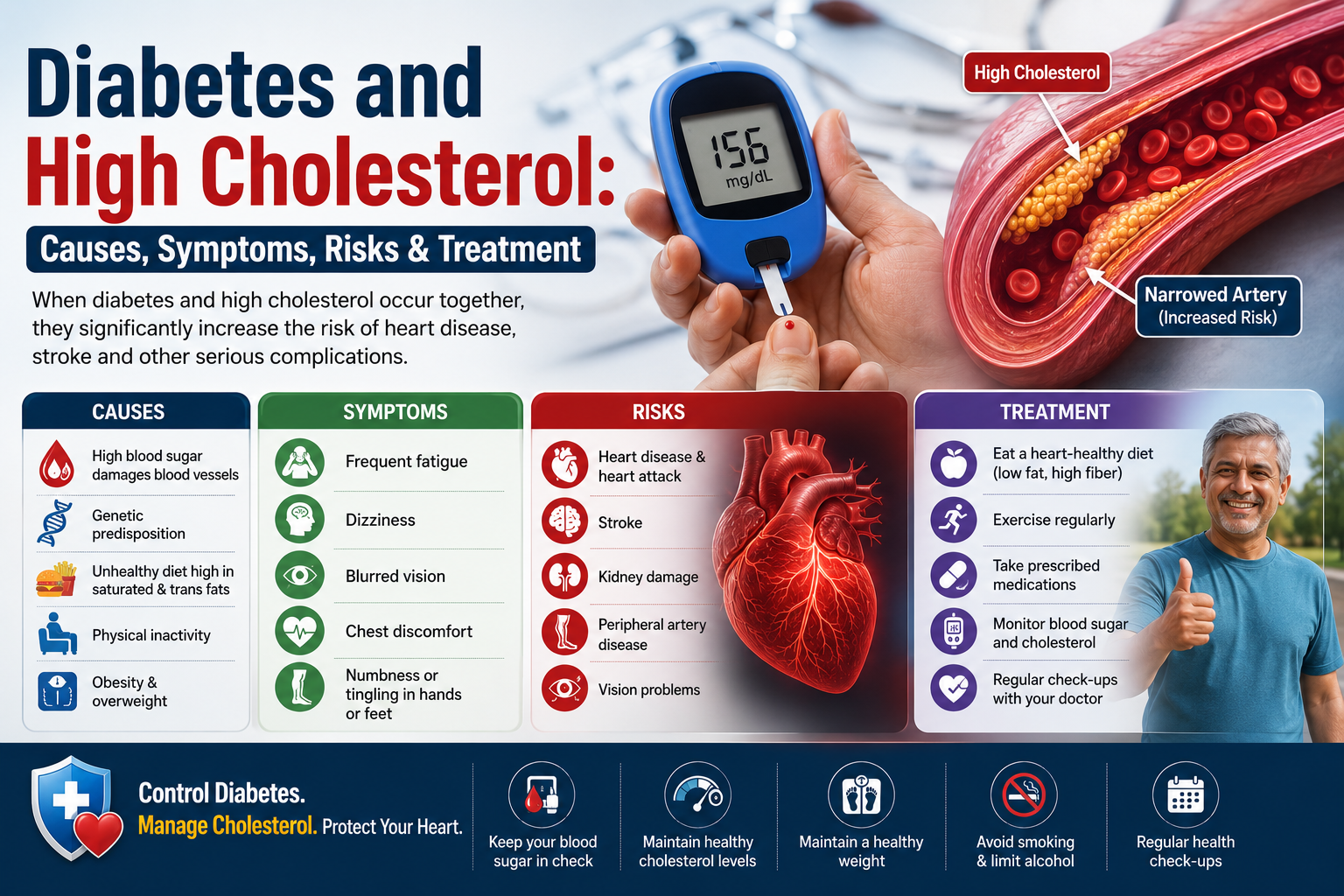
Diabetes and high cholesterol are two common health problems affecting millions of people in India. When these conditions happen together, they can seriously increase the risk of heart disease, stroke, kidney damage, and nerve problems. Understanding the connection between diabetes and high cholesterol is important for protecting your long-term health.
People with diabetes often have unhealthy cholesterol levels because high blood sugar affects how the body handles fats. Over time, this can damage blood vessels and lead to life-threatening complications. The good news is that with the right treatment, healthy food choices, regular exercise, and routine checkups, both conditions can be managed successfully.
This guide explains everything you need to know about diabetes and cholesterol in simple language.
What Is Diabetes?
Diabetes is a condition where the body cannot properly control blood sugar levels. Blood sugar, also called glucose, is the body’s main source of energy.
There are different types of diabetes:
Type 1 Diabetes
The body does not make insulin. Insulin is a hormone that helps sugar enter cells for energy.
Type 2 Diabetes
The body does not use insulin properly. This is the most common type in India.
Gestational Diabetes
This develops during pregnancy and usually improves after childbirth.
What Is Cholesterol?
Cholesterol is a waxy fat-like substance found in the blood. The body needs some cholesterol to make hormones and healthy cells. But too much cholesterol can block blood vessels.
There are different types of cholesterol:
LDL Cholesterol
Known as “bad cholesterol.” High LDL can clog arteries.
HDL Cholesterol
Known as “good cholesterol.” It helps remove extra cholesterol from the body.
Triglycerides
A type of fat in the blood. High levels increase heart disease risk.
How Are Diabetes and High Cholesterol Connected?
Diabetes affects how the body processes fats. High blood sugar damages blood vessels and changes cholesterol balance.
People with diabetes often have:
- High LDL cholesterol
- Low HDL cholesterol
- High triglycerides
This combination is dangerous because it increases the risk of blocked arteries.
When blood vessels become narrow, the heart and brain may not get enough oxygen-rich blood. This can lead to heart attack or stroke.
Why People With Diabetes Often Have High Cholesterol
Several factors increase cholesterol levels in diabetic patients.
Insulin Resistance
In Type 2 diabetes, the body becomes resistant to insulin. This affects fat metabolism and raises bad cholesterol.
Unhealthy Diet
Foods rich in sugar, fried items, processed snacks, and trans fats increase both blood sugar and cholesterol.
Lack of Exercise
Physical inactivity lowers good cholesterol and raises weight gain risk.
Obesity
Excess body fat, especially around the belly, worsens diabetes and cholesterol problems.
Smoking and Alcohol
These habits damage blood vessels and increase cholesterol complications.
Genetics
Family history can increase the risk of both conditions.
Symptoms of Diabetes
Early diabetes may not always show symptoms.
Common signs include:
- Frequent urination
- Increased thirst
- Constant hunger
- Fatigue
- Blurred vision
- Slow wound healing
- Numbness in hands or feet
- Weight loss without reason
Symptoms of High Cholesterol
High cholesterol usually has no clear symptoms. Many people discover it during blood tests.
However, severe cholesterol buildup may cause:
- Chest pain
- Shortness of breath
- Fat deposits around eyes
- Leg pain while walking
Because symptoms are silent, regular health checkups are important.
Health Risks of Diabetes and High Cholesterol
When both conditions occur together, complications become more serious.
Heart Disease
Blocked arteries increase heart attack risk.
Stroke
Reduced blood flow to the brain may cause stroke.
Kidney Disease
High sugar and cholesterol damage kidney blood vessels.
Nerve Damage
Poor blood circulation affects nerves, especially in the feet.
Eye Problems
Diabetes can damage the retina and affect vision.
High Blood Pressure
This often develops along with diabetes and cholesterol problems.
How Doctors Diagnose Diabetes and Cholesterol Problems
Doctors use blood tests and physical examinations.
Tests for Diabetes
Fasting Blood Sugar Test
Measures blood sugar after fasting.
HbA1c Test
Shows average blood sugar levels over 2–3 months.
Oral Glucose Tolerance Test
Checks how the body handles sugar.
Tests for Cholesterol
Lipid Profile Test
Measures:
- LDL cholesterol
- HDL cholesterol
- Triglycerides
- Total cholesterol
Adults above 30 should get regular cholesterol screening, especially if they have diabetes.
Normal Cholesterol Levels
Healthy cholesterol levels are generally:
- Total cholesterol: Below 200 mg/dL
- LDL cholesterol: Below 100 mg/dL
- HDL cholesterol: Above 40 mg/dL for men
- Triglycerides: Below 150 mg/dL
Your doctor may suggest stricter goals if you have diabetes.
Treatment for Diabetes and High Cholesterol
Treatment depends on age, lifestyle, blood test results, and overall health.
Medicines for Diabetes
Doctors may prescribe:
- Metformin
- Insulin
- Sulfonylureas
- DPP-4 inhibitors
- SGLT2 inhibitors
Dosage depends on individual medical needs.
Medicines for Cholesterol
Common cholesterol medicines include:
- Statins
- Fibrates
- Ezetimibe
These help reduce LDL cholesterol and protect the heart.
Best Diet for Diabetes and Cholesterol Control
Healthy eating plays a major role in managing both conditions.
Foods to Eat
High-Fiber Foods
- Oats
- Brown rice
- Whole wheat
- Fruits
- Vegetables
Healthy Fats
- Nuts
- Seeds
- Olive oil
- Fatty fish
Protein Sources
- Dal
- Eggs
- Paneer
- Chicken
- Fish
Low Glycemic Foods
These raise blood sugar slowly.
Examples:
- Apple
- Guava
- Beans
- Lentils
Foods to Avoid
- Fried foods
- Bakery products
- Sugary drinks
- White bread
- Processed snacks
- Fast food
- Excess sweets
Indian Diet Tips for Better Health
Indian meals can be healthy with simple changes.
Breakfast Ideas
- Oats upma
- Vegetable poha
- Idli with sambar
Lunch Ideas
- Brown rice
- Dal
- Salad
- Grilled vegetables
Dinner Ideas
- Chapati
- Mixed vegetables
- Soup
- Grilled paneer
Avoid overeating at night.
Lifestyle Changes That Help
Healthy habits can improve both diabetes and cholesterol levels.
Exercise Regularly
Aim for at least 30 minutes daily.
Good options include:
- Walking
- Cycling
- Yoga
- Swimming
Maintain Healthy Weight
Even small weight loss improves insulin sensitivity.
Quit Smoking
Smoking greatly increases heart disease risk.
Sleep Well
Poor sleep affects blood sugar and cholesterol balance.
Manage Stress
Meditation and relaxation techniques help control stress hormones.
Can Diabetes and High Cholesterol Be Prevented?
Yes, prevention is possible in many cases.
Prevention Tips
- Eat balanced meals
- Stay physically active
- Avoid smoking
- Limit alcohol
- Maintain healthy weight
- Monitor blood sugar regularly
- Get yearly health checkups
Early action can reduce future complications.
When to See a Doctor
Consult a doctor if you experience:
- Frequent thirst
- Sudden fatigue
- Chest pain
- High blood sugar readings
- Tingling in feet
- Unexplained weight changes
People with family history of diabetes or heart disease should get tested regularly.
Complications If Left Untreated
Ignoring diabetes and cholesterol problems can lead to severe health conditions.
Serious Complications
- Heart attack
- Stroke
- Kidney failure
- Blindness
- Foot ulcers
- Nerve damage
- Poor blood circulation
Early treatment greatly reduces these risks.
Diabetes and Cholesterol in India
India has one of the world’s largest diabetic populations. Sedentary lifestyle, unhealthy food habits, stress, and obesity are major reasons.
Urban populations are especially affected due to:
- Fast food consumption
- Desk jobs
- Lack of exercise
- Poor sleep habits
Regular screening and awareness are important for preventing complications.
Tips for Managing Both Conditions Together
Follow Your Medicine Schedule
Never skip prescribed medicines.
Track Your Numbers
Monitor:
- Blood sugar
- HbA1c
- Cholesterol
- Blood pressure
Visit Your Doctor Regularly
Routine follow-ups help prevent complications.
Stay Hydrated
Drink enough water daily.
Read Food Labels
Avoid hidden sugars and unhealthy fats.
Frequently Asked Questions (FAQs)
1. Can diabetes cause high cholesterol?
Yes. Diabetes affects fat metabolism and can increase bad cholesterol levels.
2. Is high cholesterol common in diabetic patients?
Yes. Many people with Type 2 diabetes also have cholesterol problems.
3. What cholesterol level is dangerous?
LDL cholesterol above 160 mg/dL is considered high risk.
4. Can exercise reduce cholesterol?
Yes. Regular exercise improves good cholesterol and lowers bad cholesterol.
5. Which foods help lower cholesterol?
Oats, fruits, vegetables, nuts, and fish help lower cholesterol.
6. Can diabetes be cured?
Diabetes can be controlled but usually not permanently cured.
7. What is the best exercise for diabetes?
Walking, yoga, and cycling are excellent options.
8. Can stress increase blood sugar?
Yes. Stress hormones can raise blood sugar levels.
9. How often should diabetics check cholesterol?
At least once a year or as advised by a doctor.
10. Is rice bad for diabetes?
Large amounts of white rice may raise blood sugar quickly.
11. Can children develop diabetes?
Yes. Both Type 1 and Type 2 diabetes can occur in children.
12. Are eggs safe for cholesterol patients?
Yes, in moderation and as part of a healthy diet.
13. Does obesity increase diabetes risk?
Yes. Excess weight is a major risk factor.
14. What is HbA1c?
It is a blood test showing average blood sugar over 2–3 months.
15. Can cholesterol medicines have side effects?
Some people may experience muscle pain or digestive issues.
16. Is walking after meals helpful?
Yes. Walking helps improve blood sugar control.
17. Can diabetes damage the heart?
Yes. It increases heart disease risk significantly.
18. What oils are better for cholesterol?
Olive oil, mustard oil, and sunflower oil are healthier choices.
19. Is fasting helpful for diabetes?
Only under medical guidance.
20. Can high cholesterol cause stroke?
Yes. Blocked blood vessels can reduce blood flow to the brain.
21. What drinks should diabetics avoid?
Sugary drinks and soft drinks should be limited.
22. Can sleep affect diabetes?
Yes. Poor sleep can worsen blood sugar control.
23. Is diabetes hereditary?
Family history increases risk.
24. Can high cholesterol be reversed?
Healthy lifestyle changes and medicines can improve cholesterol levels.
25. Does alcohol affect cholesterol?
Yes. Excess alcohol raises triglycerides.
26. Is fruit safe for diabetics?
Yes, low-sugar fruits in moderation are healthy.
27. Can diabetes affect eyesight?
Yes. High sugar levels may damage eye blood vessels.
28. What are triglycerides?
They are fats stored in the blood.
29. Can yoga help diabetes?
Yes. Yoga supports stress reduction and fitness.
30. Is cholesterol testing painful?
No. It only requires a simple blood sample.
31. What causes insulin resistance?
Obesity, inactivity, and genetics are common causes.
32. Can diabetes affect kidneys?
Yes. Long-term diabetes may damage kidneys.
33. Are sugar-free foods always healthy?
Not always. Some contain unhealthy fats.
34. Is diabetes more common in Indians?
Yes. Indians have higher diabetes risk due to genetics and lifestyle.
35. Can dehydration affect blood sugar?
Yes. It may increase sugar concentration in blood.
36. What is diabetic neuropathy?
It is nerve damage caused by high blood sugar.
37. Can cholesterol affect blood pressure?
Yes. Blocked arteries can increase blood pressure.
38. Are herbal remedies enough for diabetes?
No. Always follow medical advice and prescribed treatment.
39. Should diabetics avoid sweets completely?
Occasional small portions may be allowed with doctor guidance.
40. Can cholesterol affect liver health?
Yes. Fat buildup may damage the liver.
41. Is breakfast important for diabetics?
Yes. Skipping meals may affect sugar control.
42. What is metabolic syndrome?
A group of conditions including diabetes, obesity, and high cholesterol.
43. Can diabetes increase infection risk?
Yes. High sugar weakens immunity.
44. Does smoking worsen diabetes?
Yes. Smoking damages blood vessels further.
45. Can stress eating increase cholesterol?
Yes. Emotional eating often includes unhealthy foods.
46. What are healthy snacks for diabetics?
Nuts, fruits, sprouts, and yogurt are good options.
47. How long does cholesterol treatment take?
Many people require long-term treatment.
48. Is high cholesterol always genetic?
No. Lifestyle also plays a major role.
49. Can diabetes affect sexual health?
Yes. Poor circulation may affect sexual function.
50. Why are regular checkups important?
They help detect complications early and improve treatment outcomes.
Conclusion
Diabetes and high cholesterol are closely connected conditions that can seriously affect heart health and overall well-being. However, early diagnosis, healthy lifestyle habits, regular exercise, balanced diet, and proper medical treatment can help manage both conditions successfully.
Small daily changes can make a big difference over time. Regular monitoring and doctor consultations are essential for preventing severe complications like heart attack, stroke, kidney disease, and nerve damage.
Taking care of your health today can help you enjoy a healthier future.
Disclaimer
This blog is for educational purposes only and should not replace professional medical advice, diagnosis, or treatment. Always consult a qualified healthcare provider for personalized guidance regarding diabetes, cholesterol, medicines, diet, or lifestyle changes.





Comments (0)
No comments yet. Be the first to share your thoughts!
Leave a Comment