
Introduction
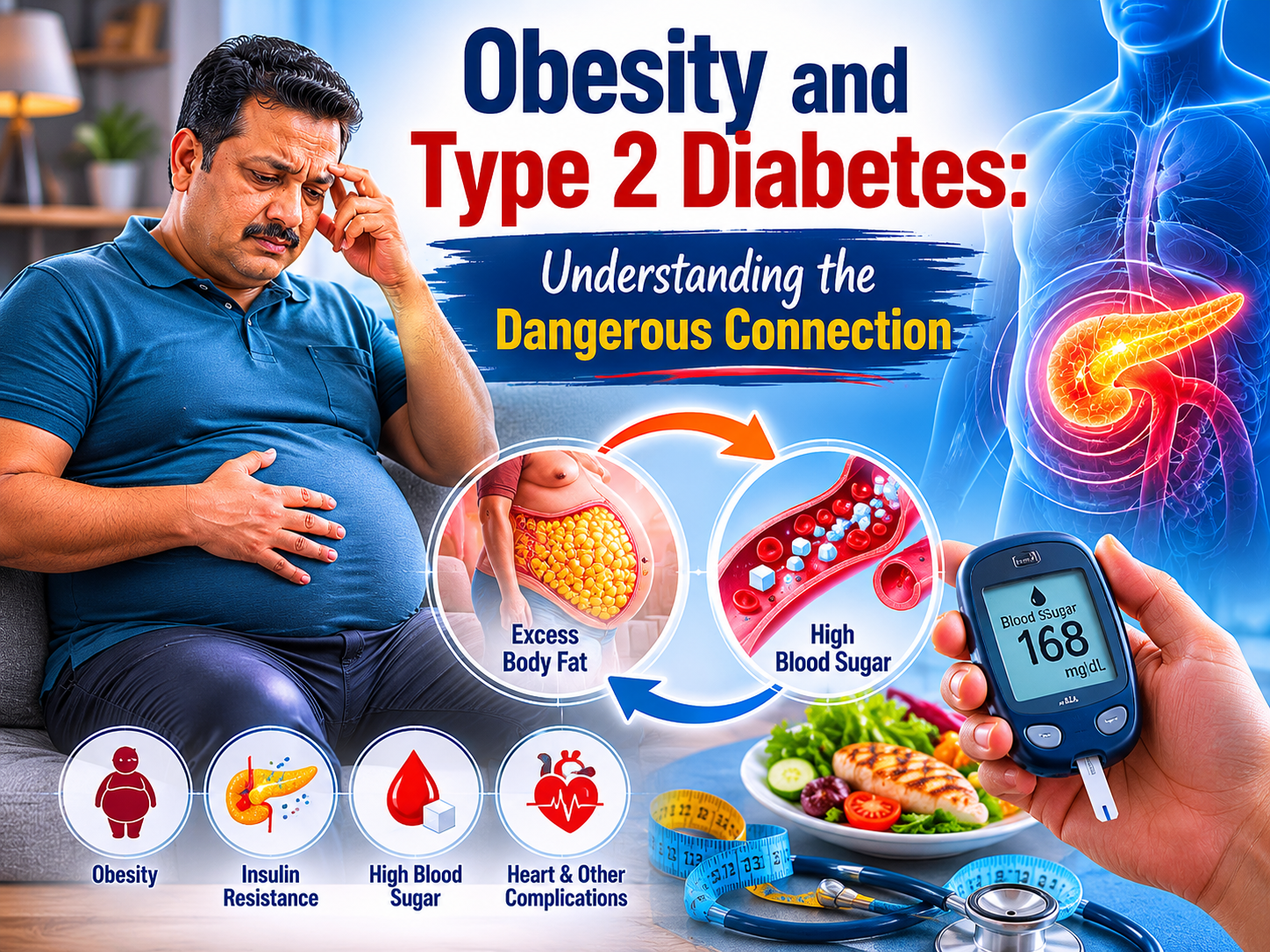
Obesity and Type 2 Diabetes are two major health problems affecting millions of people in India. Over the past few years, sedentary lifestyles, unhealthy eating habits, stress, and lack of physical activity have increased the number of people living with obesity and diabetes. These conditions are closely connected.
Obesity does not just affect body shape or appearance. Excess body fat can change how the body uses insulin, a hormone that controls blood sugar levels. When this happens, the risk of developing Type 2 Diabetes becomes much higher.
Understanding this connection can help people make better lifestyle choices and reduce future health risks. In this blog, we explain how obesity leads to Type 2 Diabetes, warning signs, treatment options, prevention tips, and when to consult a doctor.
What Is Obesity?
Obesity is a medical condition in which a person has excessive body fat that may harm overall health. Doctors often use Body Mass Index (BMI) to measure obesity.
For Indians:
- BMI above 25 is considered overweight
- BMI above 30 is considered obese
Obesity can affect adults, teenagers, and even children. It increases the risk of several health problems, including:
- Type 2 Diabetes
- High blood pressure
- Heart disease
- Fatty liver disease
- Sleep apnea
- Joint pain
What Is Type 2 Diabetes?
Type 2 Diabetes is a condition where the body cannot properly use insulin or does not produce enough insulin. This causes sugar levels in the blood to rise.
Insulin is a hormone made by the pancreas. It helps glucose move from the blood into cells for energy. In Type 2 Diabetes, the body becomes resistant to insulin.
High blood sugar over time can damage:
- Eyes
- Kidneys
- Nerves
- Heart
- Blood vessels
How Obesity Increases the Risk of Type 2 Diabetes
The link between obesity and Type 2 Diabetes is mainly due to insulin resistance.
1. Excess Fat Causes Insulin Resistance
Fat tissue, especially around the abdomen, releases chemicals that affect insulin function. As body fat increases, cells stop responding properly to insulin.
This is called insulin resistance.
The pancreas then tries to produce more insulin to keep blood sugar normal. Over time, the pancreas becomes unable to keep up, leading to Type 2 Diabetes.
2. Belly Fat Is More Dangerous
Abdominal fat, also called visceral fat, surrounds internal organs. This type of fat is more harmful than fat under the skin.
Belly fat:
- Increases inflammation
- Raises insulin resistance
- Disturbs hormone balance
- Increases blood sugar levels
People with larger waist sizes have a greater risk of diabetes even if they are not extremely overweight.
3. Obesity Increases Inflammation
Excess fat tissue releases inflammatory substances into the body. Chronic inflammation affects insulin activity and damages cells.
This long-term inflammation makes it difficult for the body to control blood sugar.
4. Obesity Reduces Physical Activity
People with obesity may experience:
- Joint pain
- Breathlessness
- Fatigue
This can reduce physical activity levels, leading to weight gain and poor blood sugar control.
Lack of exercise further worsens insulin resistance.
5. Hormonal Imbalance
Obesity changes hormones related to hunger and metabolism. These changes can:
- Increase appetite
- Reduce fullness after meals
- Affect blood sugar regulation
Hormonal imbalance contributes to diabetes development over time.
Risk Factors for Obesity and Type 2 Diabetes
Certain factors increase the chances of developing both obesity and diabetes.
Common Risk Factors
- Unhealthy diet
- Lack of exercise
- Family history
- Stress
- Poor sleep
- Smoking
- Alcohol consumption
- Hormonal disorders
- Aging
- Long sitting hours
Symptoms of Obesity-Related Type 2 Diabetes
Many people may not notice symptoms in the early stages.
Common Symptoms
- Frequent urination
- Increased thirst
- Constant hunger
- Fatigue
- Blurred vision
- Slow wound healing
- Frequent infections
- Tingling in hands or feet
- Dark patches around the neck or armpits
If these symptoms appear, consult a doctor for blood sugar testing.
Diagnosis of Type 2 Diabetes
Doctors may recommend the following tests:
Blood Tests
Fasting Blood Sugar Test
Measures blood sugar after fasting.
HbA1c Test
Shows average blood sugar over 3 months.
Oral Glucose Tolerance Test
Checks how the body handles sugar.
Random Blood Sugar Test
Measures blood sugar at any time.
Doctors may also measure:
- BMI
- Waist circumference
- Blood pressure
- Cholesterol levels
Complications of Obesity and Type 2 Diabetes
If not controlled, these conditions can lead to serious health problems.
Possible Complications
- Heart disease
- Stroke
- Kidney damage
- Vision loss
- Nerve damage
- Foot ulcers
- Fatty liver disease
- Sleep apnea
- Depression
Early diagnosis and treatment can reduce these risks.
Treatment Options
Treatment usually focuses on weight reduction and blood sugar control.
Lifestyle Changes
Healthy Diet
A balanced diet is very important.
Include:
- Fruits
- Vegetables
- Whole grains
- Lean protein
- Nuts and seeds
Avoid:
- Sugary drinks
- Junk food
- Deep-fried foods
- Excess sweets
- Processed foods
Regular Exercise
Exercise improves insulin sensitivity.
Recommended Activities
- Walking
- Cycling
- Swimming
- Yoga
- Strength training
Aim for at least 30 minutes of exercise most days.
Weight Loss
Even losing 5–10% of body weight can improve blood sugar levels.
Weight loss helps:
- Reduce insulin resistance
- Lower blood pressure
- Improve energy levels
Medicines for Type 2 Diabetes
Doctors may prescribe:
- Metformin
- Insulin
- GLP-1 receptor medicines
- Other diabetes medications
Medicine choice depends on:
- Blood sugar levels
- Weight
- Age
- Other health conditions
Never take medicines without medical advice.
Can Obesity-Related Diabetes Be Reversed?
In some cases, early Type 2 Diabetes can go into remission with:
- Significant weight loss
- Healthy eating
- Exercise
- Medical supervision
However, this is different from a permanent cure. Blood sugar monitoring remains important.
Prevention Tips
Preventing obesity can reduce diabetes risk significantly.
Practical Prevention Tips
- Eat home-cooked meals
- Limit sugar intake
- Stay physically active
- Sleep 7–8 hours daily
- Drink enough water
- Avoid smoking
- Manage stress
- Monitor weight regularly
- Get annual health checkups
Childhood Obesity and Diabetes
Childhood obesity is increasing in India because of:
- Fast food consumption
- Screen time
- Lack of outdoor activities
Children with obesity have a higher risk of:
- Early Type 2 Diabetes
- High cholesterol
- Fatty liver disease
Parents should encourage healthy eating and physical activity from an early age.
When to See a Doctor
Consult a doctor if you:
- Gain weight rapidly
- Have a family history of diabetes
- Experience excessive thirst or urination
- Feel tired all the time
- Notice dark skin patches
- Have difficulty losing weight
Early treatment can prevent complications.
Lifestyle Changes That Help Long-Term
Long-term health depends on consistency.
Healthy Daily Habits
- Walk after meals
- Eat smaller portions
- Avoid late-night eating
- Reduce stress
- Practice mindful eating
- Stay active throughout the day
Small daily changes can produce major health improvements over time.
Mental Health and Obesity
Obesity can also affect emotional health.
Many people experience:
- Low confidence
- Anxiety
- Depression
- Social isolation
Mental health support, counseling, and family encouragement can improve overall well-being.
Obesity and Diabetes in India
India is known as the “diabetes capital” of the world because of rising diabetes cases.
Contributing factors include:
- Urban lifestyle
- Processed food intake
- Stress
- Reduced physical activity
- Genetic risk among Indians
Regular screening and awareness are essential.
Conclusion
Obesity is one of the biggest risk factors for Type 2 Diabetes. Excess body fat, especially around the abdomen, affects insulin function and increases blood sugar levels. Without proper management, obesity and diabetes can lead to serious health complications.
The good news is that these risks can often be reduced through healthy lifestyle changes, regular exercise, balanced nutrition, weight management, and medical care.
Early action is the key. If you are overweight or experiencing symptoms of diabetes, consult a healthcare professional and begin your journey toward better health today.
Frequently Asked Questions (FAQs)
1. Can obesity directly cause Type 2 Diabetes?
Yes. Obesity increases insulin resistance, which can lead to Type 2 Diabetes.
2. Does belly fat increase diabetes risk?
Yes. Belly fat is strongly linked to insulin resistance and diabetes.
3. Can losing weight prevent diabetes?
Yes. Weight loss can significantly reduce diabetes risk.
4. Is obesity common in India?
Yes. Obesity rates are increasing due to lifestyle changes and unhealthy diets.
5. What is insulin resistance?
It is a condition where body cells do not respond properly to insulin.
6. Can children develop Type 2 Diabetes?
Yes. Childhood obesity increases the risk.
7. Is walking good for diabetes prevention?
Yes. Walking improves blood sugar control and supports weight loss.
8. Can stress increase diabetes risk?
Yes. Stress can affect hormones and increase blood sugar levels.
9. Are sugary drinks harmful?
Yes. Sugary beverages contribute to obesity and high blood sugar.
10. How much exercise is needed daily?
At least 30 minutes of moderate activity is recommended.
11. Can obesity affect heart health?
Yes. Obesity increases the risk of heart disease and high blood pressure.
12. Is diabetes reversible?
Some early cases may go into remission with major lifestyle changes.
13. Does poor sleep affect weight gain?
Yes. Lack of sleep can increase hunger hormones.
14. Can obesity affect mental health?
Yes. It may contribute to anxiety and depression.
15. Are crash diets safe?
No. Rapid weight loss diets can be unhealthy and difficult to maintain.
16. Is Type 2 Diabetes genetic?
Family history increases the risk but lifestyle also matters.
17. Can thin people get Type 2 Diabetes?
Yes. However, obesity greatly increases the risk.
18. What foods help reduce diabetes risk?
Vegetables, fruits, whole grains, and lean proteins are beneficial.
19. Is fast food linked to obesity?
Yes. Fast food often contains high calories and unhealthy fats.
20. Can smoking worsen diabetes?
Yes. Smoking increases complications related to diabetes.
21. Does obesity affect blood pressure?
Yes. Obesity commonly causes high blood pressure.
22. Can yoga help with obesity?
Yes. Yoga supports stress management and physical activity.
23. How often should blood sugar be checked?
As advised by your doctor, especially if you are at risk.
24. What is BMI?
BMI measures body weight in relation to height.
25. Is obesity a disease?
Yes. Obesity is recognized as a chronic medical condition.
26. Can overeating cause obesity?
Yes. Consuming more calories than needed leads to weight gain.
27. Does alcohol contribute to obesity?
Yes. Alcohol contains calories and may increase appetite.
28. Can diabetes damage kidneys?
Yes. High blood sugar can affect kidney function over time.
29. What are dark neck patches in diabetes?
They may indicate insulin resistance.
30. Can obesity cause fatty liver disease?
Yes. Excess fat can accumulate in the liver.
31. Are obesity medicines available?
Yes. Doctors may prescribe medicines in certain cases.
32. Can surgery help severe obesity?
Yes. Bariatric surgery may help some patients.
33. Is home food healthier?
Usually yes, especially when balanced and less oily.
34. Can dehydration affect blood sugar?
Yes. Poor hydration can increase blood sugar concentration.
35. Is breakfast important?
Yes. A healthy breakfast supports metabolism.
36. Can lack of exercise cause diabetes?
Yes. Physical inactivity increases insulin resistance.
37. What is HbA1c?
It measures average blood sugar over 3 months.
38. Does obesity affect sleep?
Yes. It can cause sleep apnea and poor sleep quality.
39. Can emotional eating lead to obesity?
Yes. Stress eating can increase calorie intake.
40. Is diabetes lifelong?
It usually requires long-term management.
41. Can obesity affect fertility?
Yes. Obesity can affect hormones and fertility.
42. Is packaged food unhealthy?
Many packaged foods contain excess sugar and salt.
43. Can diabetes affect eyesight?
Yes. High blood sugar can damage eye blood vessels.
44. Are annual checkups important?
Yes. Early detection improves treatment outcomes.
45. Does walking after meals help?
Yes. It can improve blood sugar control.
46. Can obesity cause joint pain?
Yes. Extra weight increases pressure on joints.
47. Is green tea useful for weight loss?
It may help slightly but is not a magic solution.
48. Can obesity shorten lifespan?
Yes. It increases many chronic disease risks.
49. Should overweight people get screened for diabetes?
Yes. Regular screening is recommended.
50. Can healthy habits reduce future risk?
Yes. Healthy lifestyle choices greatly reduce obesity and diabetes risk.
Book a Doctor Consultation with Quickobook
Looking for expert advice for obesity, diabetes, or weight management?
Quickobook helps you connect with experienced:
- General Physicians
- Diabetologists
- Endocrinologists
- Nutritionists
Book appointments online and get timely medical support for better health management.
Disclaimer
This blog is for educational purposes only and does not replace professional medical advice, diagnosis, or treatment. Always consult a qualified healthcare provider regarding any medical condition or symptoms.





Comments (0)
No comments yet. Be the first to share your thoughts!
Leave a Comment