
Intoduction
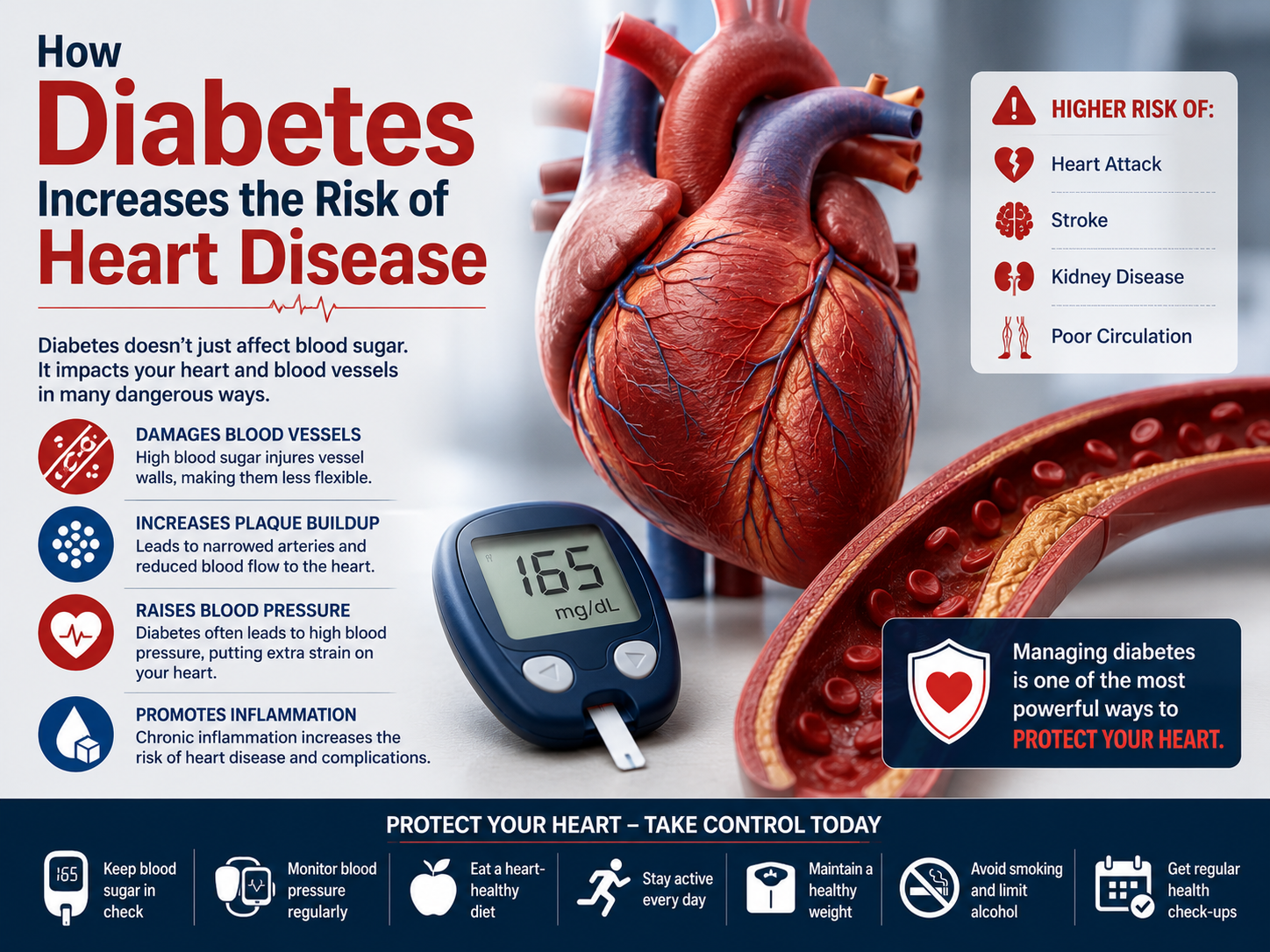
Diabetes is more than just a condition that affects blood sugar. Over time, high blood sugar levels can damage blood vessels, nerves, and important organs, especially the heart. People with diabetes are much more likely to develop heart disease compared to those without diabetes. In fact, heart disease is one of the leading causes of death among people living with diabetes.
Understanding the connection between diabetes and heart disease can help you take early steps to protect your health. With proper treatment, healthy lifestyle choices, and regular checkups, the risk can be reduced significantly.
What Is Diabetes?
Diabetes is a long-term health condition where the body cannot properly control blood sugar levels.
There are mainly two common types:
- Type 1 Diabetes: The body does not produce insulin.
- Type 2 Diabetes: The body does not use insulin properly.
Insulin is a hormone that helps sugar move from the blood into the cells for energy. When insulin does not work properly, sugar stays in the bloodstream and causes damage over time.
What Is Heart Disease?
Heart disease refers to different conditions that affect the heart and blood vessels. Some common forms include:
- Coronary artery disease
- Heart attack
- Stroke
- Heart failure
- High blood pressure
People with diabetes often develop these conditions earlier and more severely.
How Diabetes Damages the Heart
1. High Blood Sugar Damages Blood Vessels
When blood sugar remains high for a long time, it damages the inner lining of blood vessels. This makes it easier for fatty deposits called plaque to build up inside the arteries.
Narrowed arteries reduce blood flow to the heart and increase the risk of heart attack and stroke.
2. Diabetes Increases Bad Cholesterol
People with diabetes often have:
- High LDL (bad cholesterol)
- Low HDL (good cholesterol)
- High triglycerides
This unhealthy cholesterol pattern increases plaque buildup in the arteries.
3. High Blood Pressure Is Common in Diabetes
Many people with diabetes also have high blood pressure. High blood pressure forces the heart to work harder and damages blood vessels even more.
When diabetes and high blood pressure occur together, the risk of heart disease becomes much higher.
4. Obesity and Insulin Resistance
Type 2 diabetes is strongly linked to obesity, especially belly fat. Excess fat increases inflammation and insulin resistance, both of which harm the heart.
5. Chronic Inflammation
Diabetes can cause ongoing inflammation in the body. Chronic inflammation damages arteries and increases the risk of blood clots.
Signs of Heart Disease in People With Diabetes
Sometimes people with diabetes may not notice typical heart disease symptoms because diabetes can damage nerves. This is called “silent heart disease.”
Common warning signs include:
- Chest pain or pressure
- Shortness of breath
- Fatigue
- Dizziness
- Pain in the arm, neck, jaw, or back
- Swelling in the legs
- Irregular heartbeat
Seek medical attention immediately if these symptoms appear suddenly.
Who Is at Higher Risk?
You may have a higher risk of heart disease if you have diabetes along with:
- Smoking habit
- High cholesterol
- High blood pressure
- Obesity
- Family history of heart disease
- Lack of exercise
- Stress
- Poor diet
- Kidney disease
How Doctors Diagnose Heart Problems in Diabetes
Doctors may recommend several tests to check heart health.
Common Tests Include:
- Blood pressure monitoring
- Cholesterol tests
- Blood sugar tests
- ECG (electrocardiogram)
- Echocardiogram
- Stress test
- CT scan or angiography
Regular screenings help detect problems early.
How to Reduce the Risk of Heart Disease
1. Control Blood Sugar Levels
Keeping blood sugar within the target range is one of the most important ways to protect the heart.
Follow:
- Prescribed medicines
- Healthy diet
- Regular exercise
- Blood sugar monitoring
2. Eat a Heart-Healthy Diet
Choose foods that support both diabetes and heart health.
Best Foods:
- Fruits and vegetables
- Whole grains
- Nuts and seeds
- Fish
- Low-fat dairy
- Lentils and beans
Avoid:
- Sugary drinks
- Fried foods
- Excess salt
- Processed snacks
- Trans fats
3. Exercise Regularly
Physical activity improves blood sugar control and strengthens the heart.
Aim for:
- 30 minutes of exercise
- At least 5 days a week
Good options include:
- Walking
- Cycling
- Yoga
- Swimming
4. Maintain a Healthy Weight
Even a small amount of weight loss can improve blood sugar and reduce heart risk.
5. Stop Smoking
Smoking damages blood vessels and greatly increases the risk of heart attack and stroke.
6. Manage Stress
Long-term stress affects both blood sugar and heart health.
Helpful techniques:
- Meditation
- Deep breathing
- Yoga
- Adequate sleep
- Spending time with family
7. Take Medicines Properly
Doctors may prescribe:
- Diabetes medicines
- Blood pressure medicines
- Cholesterol-lowering drugs
- Blood thinners
Always follow medical advice and never stop medicines without consulting your doctor.
Can Diabetes Cause Heart Failure?
Yes. Diabetes can weaken the heart muscle over time and lead to heart failure.
Heart failure means the heart cannot pump blood effectively.
Symptoms may include:
- Swelling in feet
- Breathlessness
- Fatigue
- Rapid heartbeat
Early treatment can improve quality of life.
Diabetes and Stroke Risk
Diabetes also increases the risk of stroke because damaged blood vessels can block blood flow to the brain.
Stroke symptoms include:
- Sudden weakness
- Trouble speaking
- Facial drooping
- Severe headache
- Vision problems
A stroke is a medical emergency and requires immediate treatment.
Best Lifestyle Habits for Heart Health in Diabetes
Daily habits play a major role in preventing complications.
Healthy Habits Include:
- Drinking enough water
- Sleeping 7–8 hours
- Limiting alcohol
- Eating home-cooked meals
- Avoiding sugary snacks
- Checking blood sugar regularly
- Visiting doctors routinely
When to See a Doctor
Consult a doctor if you have:
- Frequent high blood sugar readings
- Chest discomfort
- High blood pressure
- Swelling in legs
- Shortness of breath
- Family history of heart disease
Regular health checkups help prevent serious complications.
Possible Complications
If diabetes and heart disease are not managed properly, complications may include:
- Heart attack
- Stroke
- Kidney disease
- Nerve damage
- Blindness
- Poor blood circulation
- Heart failure
Early diagnosis and treatment are very important.
Conclusion
Diabetes and heart disease are closely connected. High blood sugar damages blood vessels, increases cholesterol problems, and raises blood pressure, all of which affect heart health. However, with proper care, healthy eating, exercise, regular monitoring, and medical support, the risk can be reduced.
Managing diabetes is not only about controlling sugar levels. It is also about protecting the heart, brain, kidneys, and overall well-being. Small lifestyle changes today can prevent serious complications in the future.
Frequently Asked Questions (FAQs)
1. Can diabetes directly cause heart disease?
Yes. High blood sugar damages blood vessels and increases the risk of heart disease.
2. Why do people with diabetes have more heart attacks?
Diabetes damages arteries and increases plaque buildup, reducing blood flow to the heart.
3. Can controlling sugar levels protect the heart?
Yes. Good blood sugar control lowers the risk of heart complications.
4. Is Type 2 diabetes more linked to heart disease?
Yes. Type 2 diabetes is strongly connected to obesity and heart problems.
5. What is the biggest heart risk for diabetics?
Blocked arteries, high blood pressure, and high cholesterol are major risks.
6. Can diabetes cause stroke?
Yes. Diabetes damages blood vessels and increases stroke risk.
7. What foods should diabetics avoid for heart health?
Avoid sugary foods, fried items, processed snacks, and excess salt.
8. Is walking good for diabetic heart health?
Yes. Walking improves blood circulation and controls blood sugar.
9. How often should diabetics check heart health?
At least once a year or as advised by a doctor.
10. Can young diabetics develop heart disease?
Yes. Poorly controlled diabetes can affect people of all ages.
Quickobook CTA
Looking for trusted doctors for diabetes and heart care? Book appointments with experienced diabetologists and cardiologists through Quickobook for timely consultation and better health management.
Disclaimer
This article is for educational purposes only and does not replace professional medical advice, diagnosis, or treatment. Always consult a qualified healthcare provider regarding your medical condition.





Comments (0)
No comments yet. Be the first to share your thoughts!
Leave a Comment